
Twinkling Watermelon Review: A Beautiful Time-Travel K-Drama That Quietly Touched My Heart
When I started watching Twinkling Watermelon, I honestly had no idea how deeply it would affect me. Like many viewers, I went in expecting a light, youth-oriented K-drama with music and a touch of fantasy. But as the episodes unfolded, my Twinkling Watermelon review began to change completely. This drama is not just about romance or time travel, it is about family bonds, unspoken emotions, lost dreams, regrets, healing, and the quiet love that exists between parents and children.
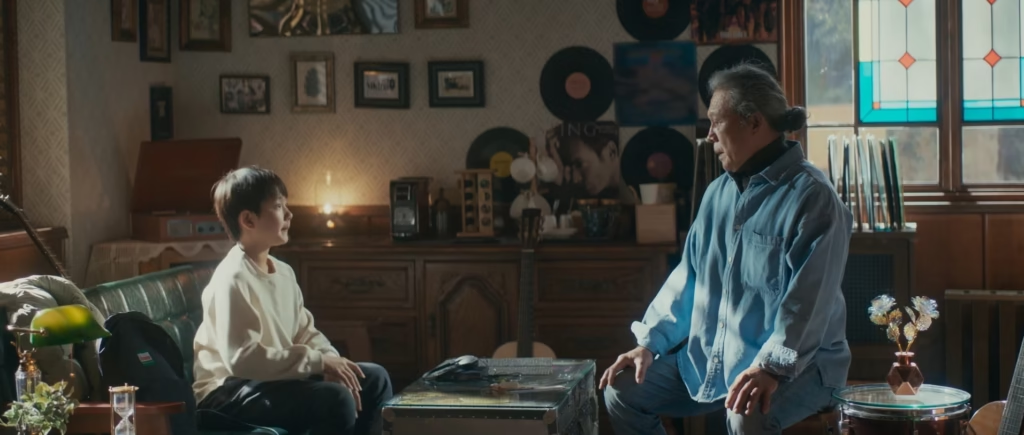
After finishing the series, I can confidently say this in my Twinkling Watermelon review this is one of those rare K-dramas that stays with you long after the final episode. It made me smile, it made me emotional, and at times, it forced me to pause and reflect on my own life and relationships.
In this Twinkling Watermelon review, I’m sharing my honest experience, why I connected with it so deeply, and why I truly believe everyone should watch Twinkling Watermelon at least once.
What Is Twinkling Watermelon About? (Spoiler-Free Overview)
At its heart, Twinkling Watermelon is a time-travel coming-of-age K-drama blended beautifully with music, romance, and family-centered emotions. In every sense, this Twinkling Watermelon review would be incomplete without appreciating how balanced its storytelling is.
The story follows Ha Eun-gyeol, a CODA (Child of Deaf Adults), living in the present timeline. He is the only hearing person in his family, which places a heavy emotional responsibility on his shoulders from a very young age. While his parents cannot hear, Eun-gyeol finds comfort and expression through music, especially the guitar, a detail that later becomes the emotional backbone of this Twinkling Watermelon review.
Through a mysterious music shop, Eun-gyeol is unexpectedly transported back to 1995, where he meets his father, not as a parent, but as a teenager full of confusion, rebellion, and unfinished dreams. This moment marks the point where Twinkling Watermelon truly begins to shine.
The drama explores:
- A son seeing his parents as young individuals, not authority figures
- How small decisions shape an entire lifetime
- The pain of emotions left unspoken
- The power of music as a language beyond sound
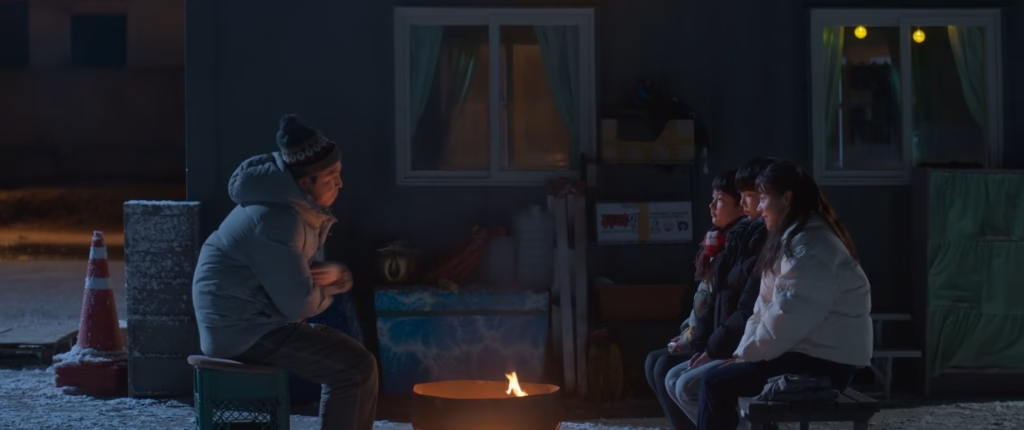
All of this is presented with warmth and sincerity, which is why my Twinkling Watermelon review feels so personal.
My First Impression While Watching Twinkling Watermelon
From the very first episode, Twinkling Watermelon gave me a soft, nostalgic feeling. The cinematography, background score, and overall pacing felt calm and deliberate as if the drama wasn’t trying to impress quickly, but instead wanted viewers to slowly sink into its emotional world. This gentle approach is something I want to highlight in this Twinkling Watermelon review.
What impressed me immediately was how naturally the drama portrayed a CODA family. Nothing felt exaggerated or forced. The struggles were subtle, realistic, and deeply emotional. Eun-gyeol’s silence at home, his responsibility of translating the world for his parents, and his suppressed desires were shown with remarkable maturity.
By the end of episode two or three, I realized this Twinkling Watermelon review was going to be very positive — because I was already emotionally invested.
Characters That Feel Real, Not Idealized
One of the strongest aspects of this Twinkling Watermelon review is how real the characters feel. They are not written as perfect people they are flawed, emotional, and human.
Ha Eun-gyeol – A Son Carrying Silent Weight
Eun-gyeol is one of the most relatable K-drama protagonists I’ve seen in recent years. He is talented, responsible, and kind, but also emotionally exhausted and confused.

While watching, I often felt that his character represents countless young people who:
- Put family responsibilities above their own dreams
- Suppress their desires to avoid conflict
- Feel guilty for wanting something more from life
His internal struggle between being a “good son” and being true to himself is portrayed beautifully. In this Twinkling Watermelon review, I especially appreciated that he is not shown as a flawless hero. He makes mistakes, loses his temper, feels jealous, and regrets his words just like real people do.
Ha Yi-chan – Seeing a Parent as a Teenager
Yi-chan, Eun-gyeol’s father in the past timeline, was one of the biggest surprises for me and a major highlight of this Twinkling Watermelon review.
Instead of being portrayed as a strict or idealized parent, Yi-chan is shown as:
- Loud and energetic
- Passionate about life
- Emotionally impulsive
- Slightly reckless, yet sincere
Watching a son interact with his father as a teenage friend rather than a guardian is one of the most unique emotional experiences this drama offers. There were moments where I genuinely forgot that Yi-chan was his father that’s how authentic the character felt.
Choi Se-kyung & On Eun-yu – Female Characters With Depth
The female leads in Twinkling Watermelon are not reduced to love interests, which is something I want to emphasize in this Twinkling Watermelon review. Each of them has:
- Emotional wounds
- Personal fears
- Their own journey of self-discovery
What I personally loved is that romance never overshadows character growth. Love in this drama feels gentle, awkward, and sincere not dramatic or toxic.
Music: The Emotional Core of Twinkling Watermelon
If I had to describe Twinkling Watermelon in one word for this Twinkling Watermelon review, it would be melodic.
Music in this drama is not just background sound, it is a storytelling language. It connects generations, heals emotional wounds, and expresses feelings that words cannot. As someone who genuinely appreciates music, I often paused episodes just to absorb certain scenes again.

The band moments, jam sessions, and quiet practice scenes felt intimate and personal. Most importantly, the idea that music can reach even those who cannot hear is handled with immense respect and sensitivity, something that deeply moved me while writing this Twinkling Watermelon review.
Core Themes That Hit Close to Home
1. Parents Were Once Dreamers Too
One of the strongest messages highlighted in this Twinkling Watermelon review is this simple truth:
Our parents were once young, confused, and full of dreams.
Watching Eun-gyeol slowly realize this was both heartbreaking and beautiful. It made me reflect on my own parents, their sacrifices, their abandoned dreams, and the emotions they never expressed openly.
The drama doesn’t blame parents or glorify children. Instead, it shows how misunderstandings quietly grow over time.
2. Communication Beyond Spoken Words
Because sign language plays a major role, Twinkling Watermelon constantly reminds us that:
- Words are not the only way to communicate
- Silence does not mean lack of love
Some of the most powerful scenes in this Twinkling Watermelon review have no dialogue at all, yet they hit the hardest emotionally.
3. Dreams Versus Responsibility
Eun-gyeol’s journey made me think deeply about how often people abandon their dreams because of responsibility or fear. This drama doesn’t give a simple answer instead, it asks a question that stays with you:
Is it wrong to want something for yourself?
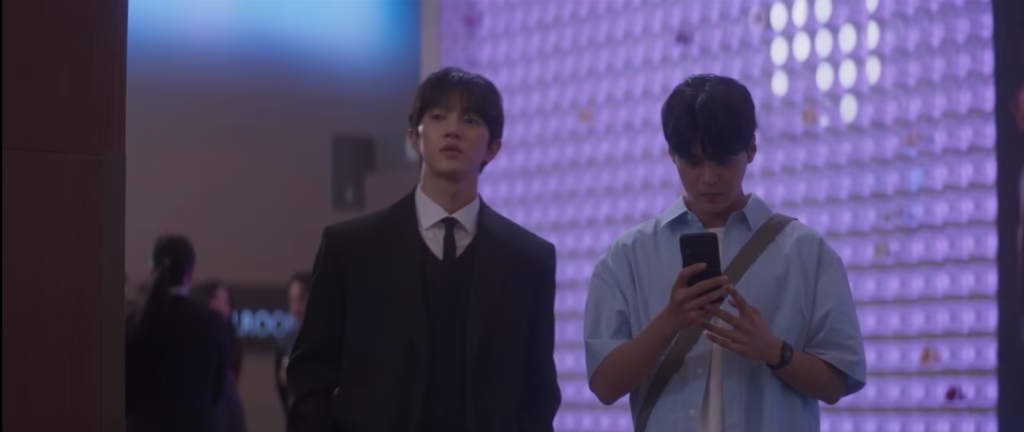
As I continued watching the series, my Twinkling Watermelon review kept changing from “this is good” to “this is special.” What started as a calm time-travel story slowly turned into an emotional journey about family bonds, missed chances, and healing wounds that time alone cannot fix.
This second half of the drama is where Twinkling Watermelon truly shines. The emotions deepen, the relationships become more complex, and the story begins to question fate itself.
Story Progression: When Time Travel Becomes Emotional Therapy
Unlike many time-travel K-dramas that focus on altering history or creating suspenseful paradoxes, Twinkling Watermelon uses time travel as a tool for emotional understanding.
Eun-gyeol doesn’t travel back in time to change the world.
He travels back to understand his father, his family, and ultimately, himself.
As the episodes progress, the drama carefully shows how:
- Small misunderstandings turn into lifelong regrets
- Words left unsaid can shape a person’s entire future
- One emotional moment can change how you see someone forever
In my Twinkling Watermelon review, this is what impressed me the most the drama never tries to be clever with sci-fi logic. Instead, it remains grounded in human emotions, which makes the story far more powerful.
Father–Son Relationship: The Heart of This Twinkling Watermelon Review
The relationship between Eun-gyeol and his father Yi-chan is the emotional backbone of the series.
Watching Eun-gyeol slowly realize that his father:
- Was once reckless
- Had dreams of music
- Felt insecure and misunderstood
- Carried emotional pain silently
…was heartbreaking.
There were scenes where Eun-gyeol wanted to scream the truth, and scenes where he chose silence instead and both choices felt painful.
What makes this dynamic so special is that they bond as friends, not as parent and child. Eun-gyeol laughs with his father, argues with him, supports him, and even feels jealous of him. These emotions feel raw and honest.
In my opinion, this father–son dynamic alone makes Twinkling Watermelon worth watching, and it is a major reason why this Twinkling Watermelon review is so positive.
Romance: Soft, Pure, and Meaningful
Romance in Twinkling Watermelon is not loud or dramatic. It is quiet, awkward, and emotionally sincere.
Eun-gyeol & Eun-yu
Their relationship develops slowly, built on:
- Shared loneliness
- Emotional vulnerability
- Understanding each other’s pain
What I personally loved is that their love story never overshadows their personal struggles. They don’t “complete” each other instead, they grow together.
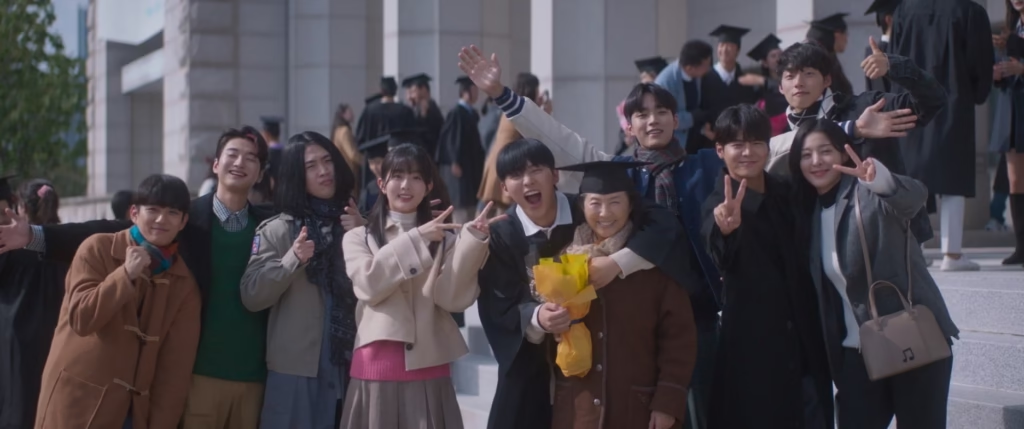
Yi-chan & Se-kyung
This relationship felt nostalgic, almost poetic. Watching young love unfold while knowing the future consequences made it emotionally heavy in a good way.
In this Twinkling Watermelon review, I must say that the romance feels earned. There is no forced chemistry or rushed confession. Everything happens naturally, which made me root for these characters even more.
Also Read: Top 5 Korean Dramas Available on Netflix in 2025: Watch These Addictive K-Dramas Now
Music as Emotion, Not Entertainment
I want to talk again about music because it deserves special mention in this Twinkling Watermelon review.
Music in this drama:
- Represents freedom
- Symbolizes unspoken emotions
- Acts as a bridge between hearing and non-hearing worlds
There are moments where music plays, but the focus is on facial expressions instead of sound. These scenes made me realize how powerful visual storytelling can be.
The band scenes especially felt alive not staged, not artificial. They carried the youthful energy of people who love music without caring about success or fame.
Representation of Deaf Culture: Handled With Respect
One thing I deeply appreciated in this Twinkling Watermelon review is how respectfully the drama handles deaf characters.
They are not portrayed as helpless or inspirational tropes. They are:
- Strong
- Flawed
- Loving
- Frustrated
- Human
The use of sign language feels natural, not forced. Even moments of conflict within the family feel realistic showing that love alone doesn’t erase communication gaps.
This authenticity adds emotional depth and makes Twinkling Watermelon stand out from typical K-dramas.
Emotional Peak Moments That Stayed With Me
Without spoiling too much, there are certain moments in the second half that genuinely stayed with me even after the drama ended:
- When Eun-gyeol realizes the true weight of his father’s sacrifices
- When a single misunderstanding changes the course of a life
- When silence speaks louder than words
- When music becomes the only form of communication
These moments made me pause the episode more than once. In my Twinkling Watermelon review, I can say that very few dramas manage to create such quiet yet powerful emotional peaks.
Also Read: Why Some Viewers Hate Alice in Borderland – Honest Breakdown (2025)
The Ending: Satisfying and Thoughtful
The ending of Twinkling Watermelon is one of the most satisfying conclusions I’ve seen in a K-drama.
It doesn’t rely on shock value or unrealistic twists. Instead, it focuses on:
- Emotional closure
- Personal growth
- Acceptance rather than perfection
Some viewers may expect a dramatic ending, but I felt this ending was true to the story’s soul. It respects the journey of the characters and leaves you with a sense of warmth.
In this Twinkling Watermelon review, I can confidently say the ending does justice to everything the drama builds up.
Why Twinkling Watermelon Left a Personal Impact on Me
This drama made me think about:
- My parents’ youth
- The dreams they may have given up
- The things I’ve never asked them
- The words I’ve never said
It reminded me that understanding someone’s past can change how we see their present.
That is why this Twinkling Watermelon review is not just about entertainment it’s about emotional connection.
Final Verdict: Is Twinkling Watermelon Worth Watching?
Absolutely, yes.
If you are looking for:
- A meaningful K-drama
- Emotional depth without toxicity
- Strong family themes
- Music-driven storytelling
- A story that feels human
Then Twinkling Watermelon is a must-watch.
Why I Believe Everyone Should Watch Twinkling Watermelon
To conclude this part of my Twinkling Watermelon review, I genuinely believe this drama is not just something you watch it’s something you experience.
You should watch Twinkling Watermelon if:
- You enjoy emotional, meaningful K-dramas
- You like slow-burn storytelling with depth
- You appreciate music-driven narratives
- You want something comforting yet emotionally impactful
It’s the kind of drama that doesn’t demand attention loudly — it quietly earns a place in your heart.
Read more of K-Drama – All of Us Are Dead Season 2: New Cast Revealed & Production Begins
My Personal Rating
Rating: 9.5 / 10
This high rating in my Twinkling Watermelon review comes from how genuinely the drama made me feel calm, emotional, and understood.
Why I Think Everyone Should Watch Twinkling Watermelon
I genuinely believe Twinkling Watermelon is not just a K-drama, it’s an experience.
You should watch it if:
- You love emotional, meaningful stories
- You enjoy slow-burn dramas with depth
- You appreciate music-driven narratives
- You want something comforting yet impactful
It’s the kind of show that doesn’t scream for attention but quietly wins your heart.