
For years, audiences have waited for a cinematic adaptation of the Ramayana that matches the scale, emotion, and grandeur of the epic itself. Now, with the release of the Ramayana Trailer, producer Namit Malhotra and director Nitesh Tiwari have finally given fans their first substantial look at one of India’s most ambitious films.
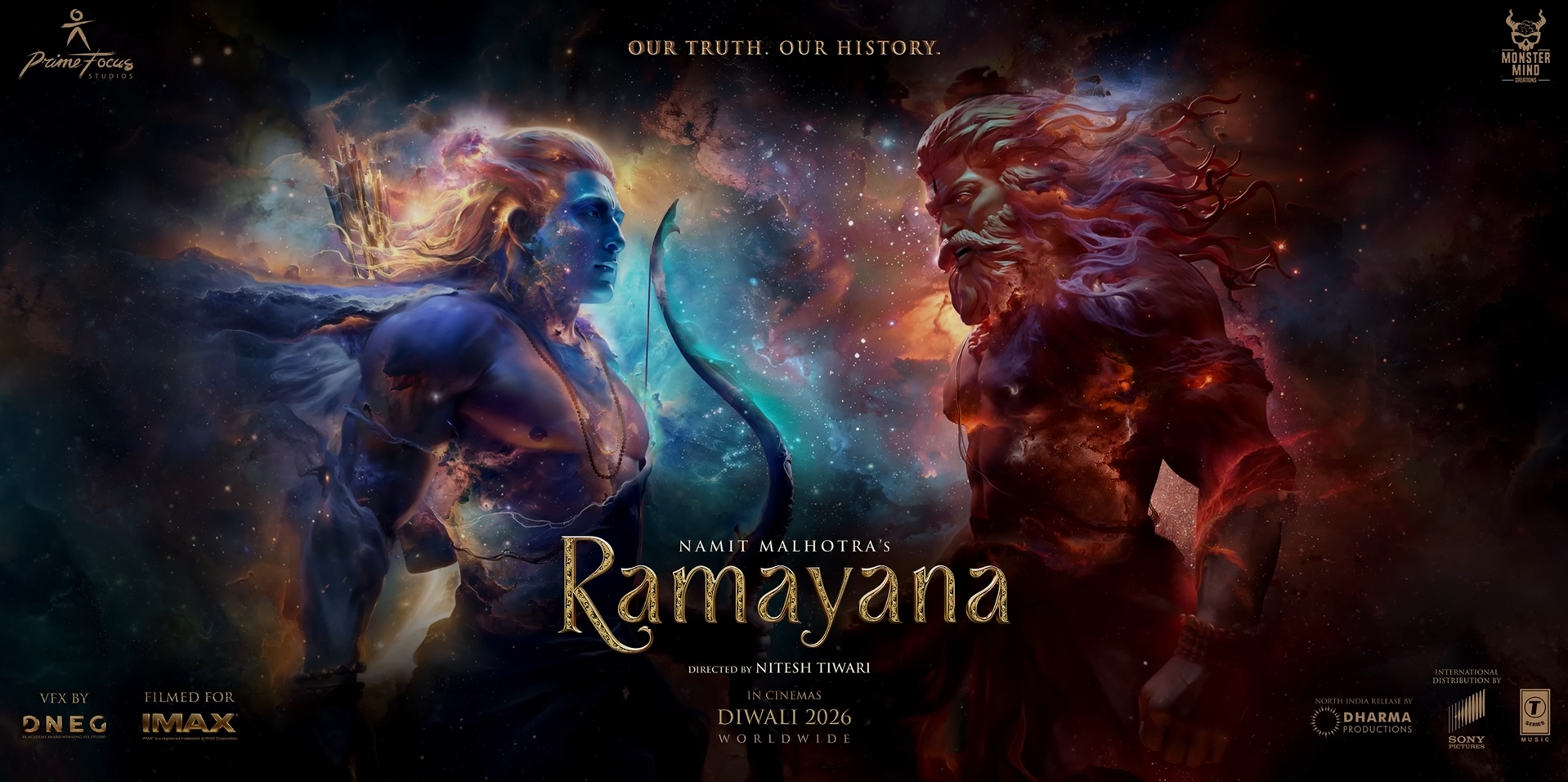
Released globally through Sony Pictures Entertainment and T-Series on YouTube four days ago, the Ramayana Trailer immediately became one of the biggest talking points across social media. From breathtaking visuals and world-class VFX to Hans Zimmer and A.R. Rahman’s powerful musical score, nearly every frame has generated excitement among movie lovers. The trailer was released after the makers shifted to a global rollout strategy following their partnership with Sony Pictures Entertainment.
But does the trailer truly live up to the enormous expectations?
After watching the trailer multiple times and analyzing its visuals, performances, storytelling, and technical execution, here’s a complete breakdown of why Ramayana could become one of the biggest Indian films ever made.
The Long Journey Behind Namit Malhotra’s Ramayana
The journey of Namit Malhotra’s Ramayana has been unlike any other Indian production.
Known globally for his work through DNEG, Namit Malhotra has spent years building a film that isn’t simply another mythology adaptation. Instead, the goal has been to create an international cinematic experience that presents one of India’s greatest epics with cutting-edge filmmaking.
Unlike previous adaptations that focused primarily on television audiences, Ramayana has been designed as a worldwide theatrical event. It is being filmed for IMAX and is planned as a two-part saga, with music by Hans Zimmer and A.R. Rahman and global distribution through Sony Pictures Entertainment.
The Ramayana Trailer clearly reflects that vision. Every frame feels larger than life.
Ramayana Trailer Makes a Powerful First Impression
The very first seconds of the Ramayana Trailer establish its tone.
Instead of rushing into action, the trailer slowly builds atmosphere. The visuals immediately communicate that this is not merely another Bollywood film but a cinematic spectacle inspired by one of the world’s oldest epics.
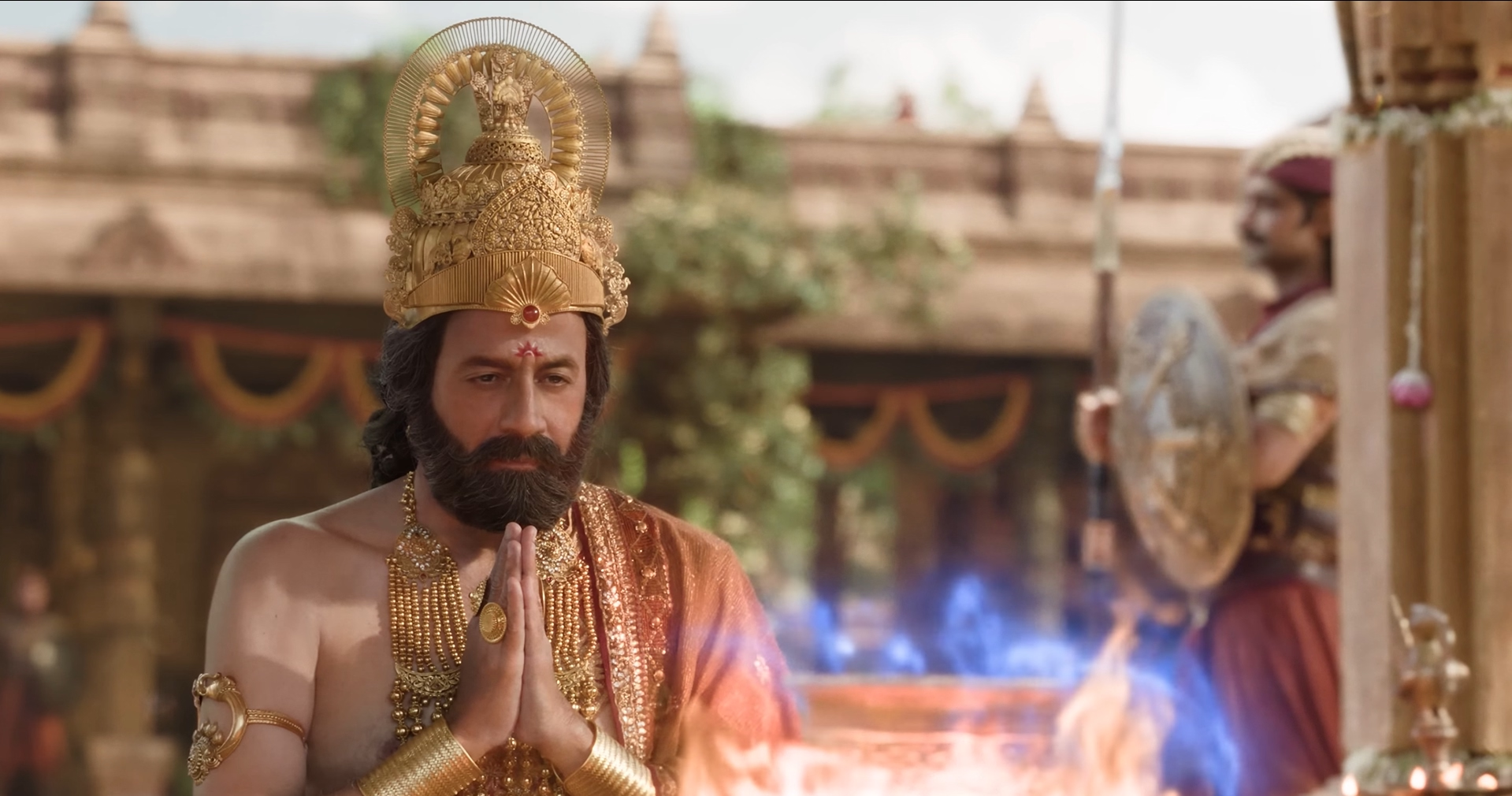
The color palette feels rich. The cinematography appears carefully crafted. The environments look expansive rather than artificial. Most importantly, the trailer avoids revealing the entire story, focusing instead on building anticipation.
That decision makes the Ramayana Trailer much more effective than many modern trailers that reveal too much.
Ranbir Kapoor as Lord Rama Looks Surprisingly Convincing
Perhaps the biggest question before the trailer released was whether Ranbir Kapoor could convincingly portray Lord Rama. After watching the Ramayana Trailer, many early doubts appear to have faded. Ranbir presents Rama with restraint rather than exaggerated heroism.
His calm expressions, disciplined body language, and composed screen presence create an interpretation that feels respectful instead of theatrical. Rather than relying on loud dialogues, the trailer allows his presence to communicate strength. This subtle performance may ultimately become one of the film’s greatest strengths.
Yash’s Ravana Could Steal the Entire Film
If one character dominates the Ramayana Trailer, it is undoubtedly Yash’s Ravana. Every appearance immediately commands attention. His towering screen presence, deep voice, elaborate costume design, and intimidating expressions make Ravana appear powerful without becoming cartoonish.
Instead of portraying Ravana as a one-dimensional villain, the trailer hints at a ruler driven by immense ambition and pride. Fans across social media have already praised Yash’s portrayal as one of the trailer’s biggest highlights. Many viewers are already calling him one of the most visually impressive versions of Ravana ever seen on screen.
Sai Pallavi Brings Grace to the Role of Sita
Casting Sai Pallavi as Sita was widely appreciated when it was announced. The Ramayana Trailer reinforces why. Although her screen time in the trailer is limited, every frame emphasizes dignity, compassion, and quiet strength.
Instead of presenting Sita only as a supporting character, the trailer suggests she will remain emotionally central to the story. Her natural screen presence perfectly complements Ranbir Kapoor’s restrained portrayal of Rama.
Also Read: Ramayana Movie Namit Malhotra: Record-Shattering Global Epic (Diwali 2026 Preview)
The Visual Effects Raise the Standard for Indian Cinema
One of the biggest talking points after the Ramayana Trailer released has been its visual effects.
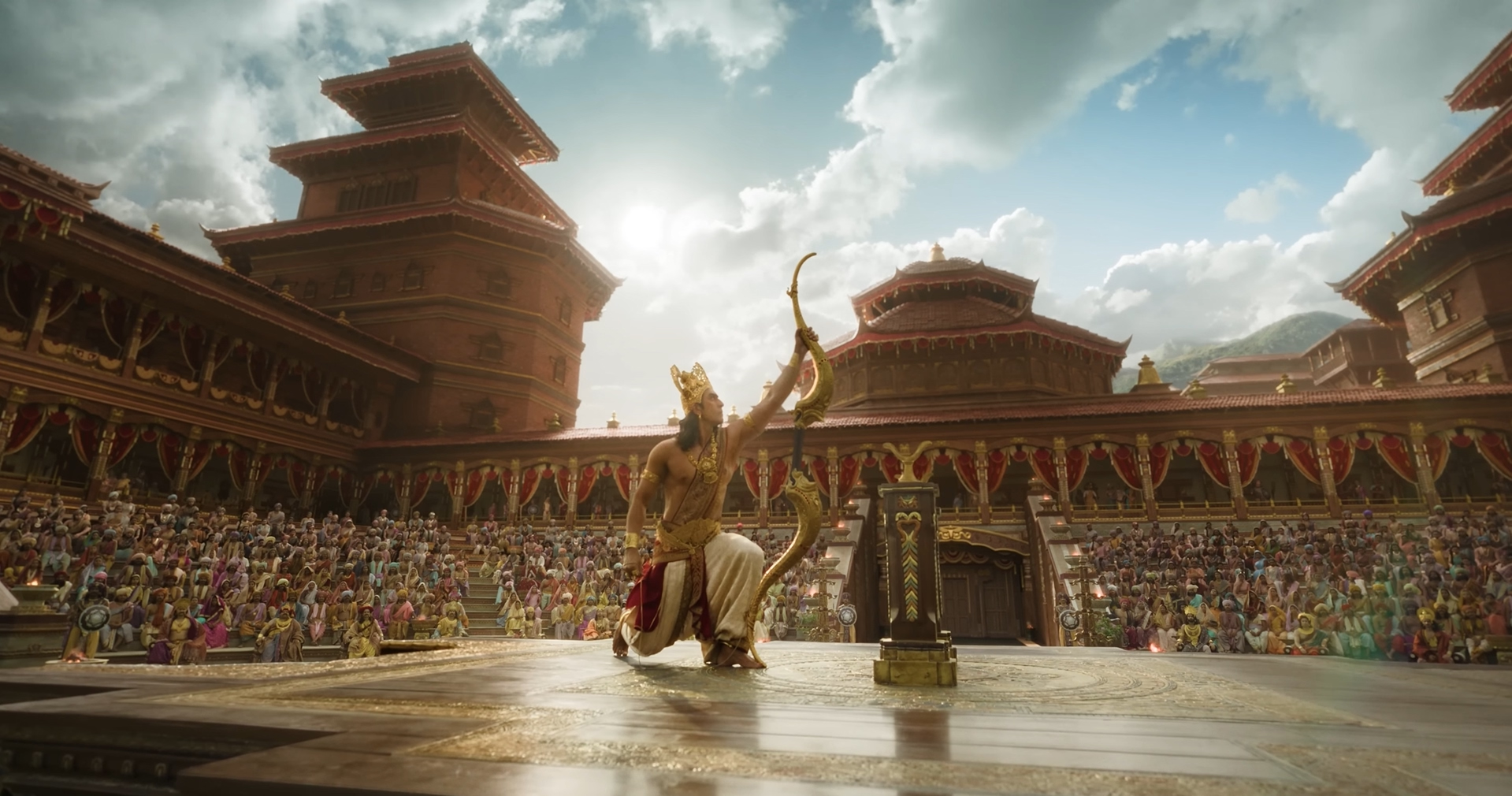
Unlike many recent Indian films where CGI often feels inconsistent, Ramayana appears to prioritize realism over spectacle. The environments feel detailed. The creatures appear integrated into the world. Large-scale battle sequences maintain clarity. Lighting remains natural across most scenes.
Fans also noticed refinements compared with earlier promotional footage, including updated VFX, redesigned rakshasas, and improved color grading. Considering Namit Malhotra’s background in world-class visual effects, expectations were already high. Fortunately, the trailer suggests those expectations may actually be justified.
Hans Zimmer and A.R. Rahman Deliver an Epic Musical Identity
Very few Indian films can claim a collaboration between Hans Zimmer and A.R. Rahman. The Ramayana Trailer offers a glimpse of what this partnership can achieve. Rather than overwhelming viewers with loud orchestration, the background score gradually builds emotional intensity. Traditional Indian influences blend naturally with large cinematic arrangements.
This combination helps the trailer feel universal while remaining deeply rooted in Indian culture. If the complete soundtrack maintains this quality, it could become one of the defining aspects of the film.
Why the Ramayana Trailer Already Feels Different
Several recent Indian mythological films have struggled because they relied heavily on visual spectacle while neglecting emotional storytelling. The Ramayana Trailer appears to take the opposite approach. The visuals impress. The music elevates. The performances remain grounded.
Most importantly, the trailer consistently emphasizes relationships rather than only action sequences. That balance gives audiences confidence that the filmmakers understand the emotional core of the Ramayana rather than treating it as simply another fantasy blockbuster.
Hidden Details in the Ramayana Trailer That Many Viewers Missed
One of the most rewarding aspects of the Ramayana Trailer is that it reveals something new with every viewing. While the trailer is only a few minutes long, it is packed with visual symbolism, carefully designed environments, and subtle references to the original epic. Rather than relying solely on flashy action sequences, the filmmakers appear to have invested considerable effort into world-building.

A notable example is the production design. Every kingdom shown in the trailer has a distinct architectural identity. Ayodhya is presented with warm golden tones that evoke prosperity, order, and divinity, while Lanka embraces darker colors, towering structures, and intricate detailing that immediately establish Ravana’s empire as powerful yet intimidating. This contrast is not accidental—it visually reinforces the moral divide between the two kingdoms without the need for exposition.
The trailer also hints that the filmmakers have taken inspiration from multiple traditional interpretations of the Ramayana rather than adapting only one version. Costume design, weaponry, temple structures, and character appearances reflect a blend of classical Indian aesthetics while remaining cinematic enough to appeal to international audiences. These details suggest that Nitesh Tiwari’s adaptation aims to respect the source material while making it accessible for a global audience.
Another interesting observation is the restrained editing style. Modern trailers often reveal nearly every major action sequence to maximize hype, but the Ramayana Trailer deliberately avoids revealing crucial story moments. Instead, it focuses on atmosphere, character introductions, and emotional tension. This approach builds anticipation rather than diminishing it, encouraging audiences to experience the full narrative in theaters.
Also Read: AI in Ramayana Movie: 7 Stunning Breakthroughs Powering Nitesh Tiwari’s Epic
Supporting Cast Adds Incredible Depth to the Film
While Ranbir Kapoor, Sai Pallavi, and Yash naturally dominate the conversation, the supporting cast deserves equal recognition. A mythology as expansive as the Ramayana depends on a rich ensemble, and the trailer hints that every major character has been treated with importance.
Sunny Deol’s brief appearance as Lord Hanuman immediately generated excitement among fans. Even with limited screen time, his commanding physical presence and unmistakable voice make him a compelling choice for the role. Hanuman is one of the most beloved characters in Indian mythology, and portraying him requires a combination of strength, devotion, humility, and emotional depth. The trailer suggests that Sunny Deol may bring precisely that balance.
The supporting characters also appear to have been designed with remarkable attention to detail. Instead of functioning merely as background figures, each seems to contribute meaningfully to the larger narrative. This is encouraging because one of the strengths of the Ramayana has always been the complexity of its supporting characters, each representing different ideals, virtues, and moral dilemmas.
The Visual Effects Could Redefine Expectations for Indian Cinema
Perhaps the most discussed aspect of the Ramayana Trailer is its visual effects. Indian audiences have become increasingly critical of CGI after several high-profile productions failed to meet expectations. As a result, skepticism surrounded this project long before the trailer’s release.
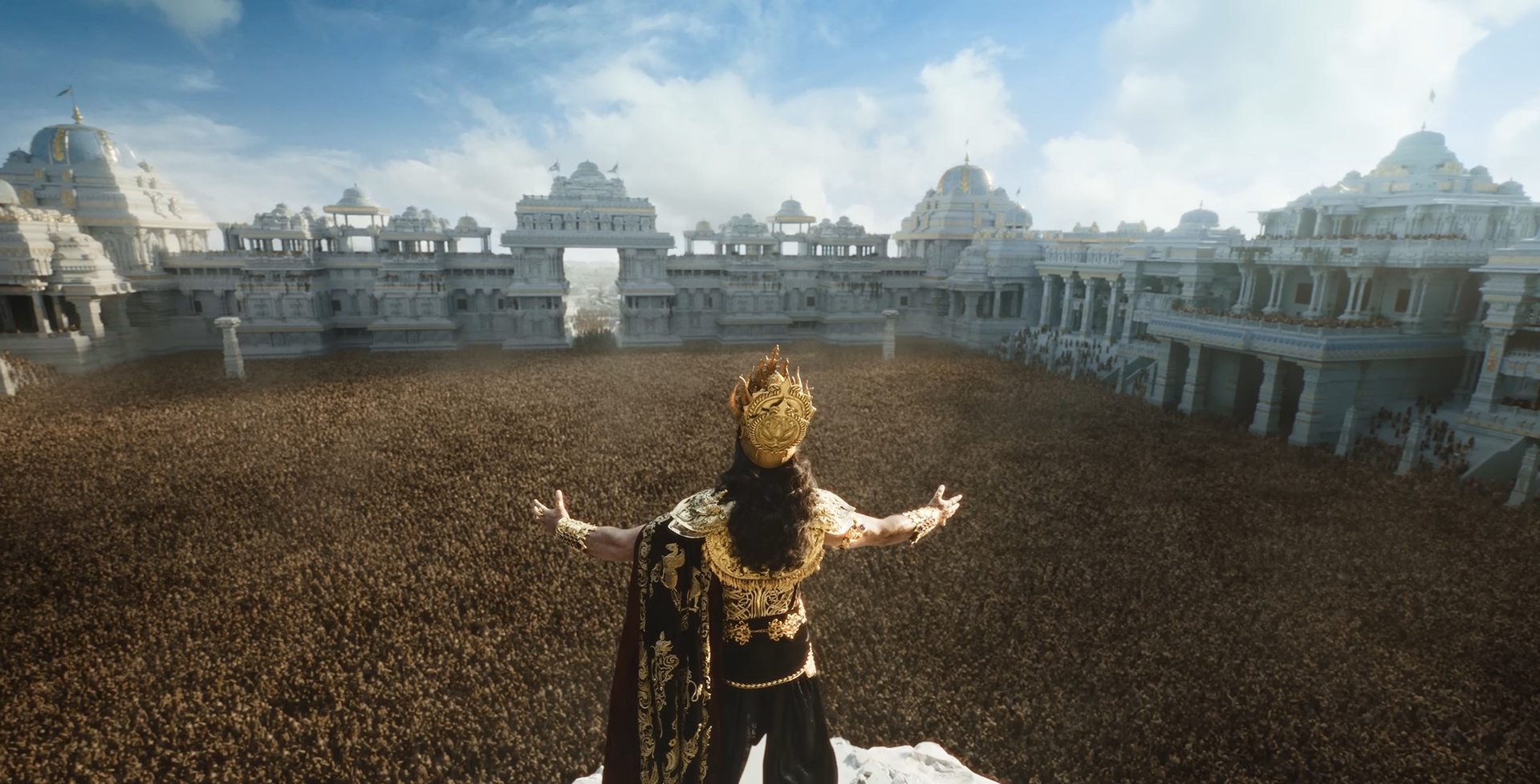
However, the footage shown so far indicates that Namit Malhotra’s extensive experience in visual effects has significantly influenced the production. Instead of overwhelming every frame with excessive CGI, the filmmakers appear to have integrated digital effects naturally into practical environments. The result is a cinematic world that feels immersive rather than artificial.
Lighting consistency is another area where the trailer stands out. CGI-heavy films often suffer because digitally created objects fail to match the lighting of real environments. In contrast, the creatures, landscapes, and large-scale battle sequences in the Ramayana Trailer blend convincingly with live-action cinematography, making the visual effects feel almost invisible—a hallmark of high-quality VFX.
If the finished film maintains this standard across its full runtime, it could establish a new benchmark for Indian mythological cinema.
Music That Elevates Every Frame
A trailer can contain stunning visuals, but without a memorable score, it rarely leaves a lasting emotional impact. Fortunately, the Ramayana Trailer benefits immensely from the collaboration between Hans Zimmer and A.R. Rahman.
Rather than competing with each other, their musical styles seem to complement one another beautifully. The orchestral arrangements provide scale and grandeur, while traditional Indian instrumentation preserves the cultural identity of the story. Together, they create a soundtrack that feels both globally cinematic and deeply rooted in Indian heritage.
The background score never overpowers the visuals. Instead, it gradually builds emotional intensity, making character reveals and dramatic moments feel even more impactful. If the complete soundtrack delivers on this early promise, it could become one of the defining musical achievements in modern Indian cinema.
Audience Reactions Show Massive Global Interest
Within hours of its release on the official YouTube channels of Sony Pictures Entertainment and T-Series, the Ramayana Trailer sparked enormous discussion across social media platforms. Fans praised the visual quality, casting choices, and respectful presentation of one of India’s most cherished epics.
Many viewers highlighted Yash’s imposing portrayal of Ravana, while others appreciated Ranbir Kapoor’s calm and composed interpretation of Lord Rama. The trailer also received praise for avoiding unnecessary dialogue and allowing visuals, music, and performances to create emotional impact.
Naturally, no major film releases without criticism. Some viewers expressed concerns about whether the final film would sustain the quality shown in the trailer or whether certain visual effects might still require refinement. Such discussions are expected for a production of this scale. Overall, however, the response has been overwhelmingly positive, with the trailer generating excitement not only in India but also among international audiences interested in large-scale fantasy cinema.
Can Ramayana Become India’s Biggest Cinematic Event?
Predicting box office performance months before release is impossible, but the early signs are undeniably encouraging. The film possesses several qualities that few Indian productions have managed to combine successfully: a universally recognized story, an accomplished director, internationally respected visual effects, a globally appealing musical collaboration, and a star-studded cast.
More importantly, the Ramayana Trailer demonstrates confidence. It does not rely on sensational editing, excessive action, or loud dialogue to create excitement. Instead, it trusts the timeless power of its story and allows the visuals, performances, and music to speak for themselves.
If the narrative maintains the same emotional depth suggested by the trailer, Ramayana has the potential to become more than just a blockbuster. It could become a landmark film that introduces one of India’s greatest epics to an entirely new generation of audiences around the world.
Final Verdict
After multiple viewings, the Ramayana Trailer leaves an overwhelmingly positive impression. It successfully balances spectacle with emotion, introducing iconic characters without revealing too much of the plot. The performances appear sincere, the production values are exceptional, and the visual effects represent a significant leap forward for Indian filmmaking.
Of course, a trailer cannot guarantee the quality of the complete film. A successful adaptation will ultimately depend on storytelling, pacing, character development, and emotional resonance. Nevertheless, the trailer has achieved exactly what it needed to do—it has generated enormous anticipation while reassuring audiences that the filmmakers understand the responsibility of adapting one of the world’s greatest epics.
If the final film fulfills the promise shown in this trailer, Ramayana may well be remembered as one of the defining cinematic achievements in Indian film history.
Frequently Asked Questions
Is the Ramayana Trailer officially released?
Yes. The official Ramayana Trailer was released on the YouTube channels of Sony Pictures Entertainment and T-Series.
Who is producing Ramayana?
The film is produced by Namit Malhotra.
Who is directing Ramayana?
Acclaimed filmmaker Nitesh Tiwari is directing the project.
Who plays Lord Rama in Ramayana?
Ranbir Kapoor portrays Lord Rama.
Who plays Ravana?
Kannada superstar Yash plays the role of Ravana.
Who plays Sita?
Sai Pallavi portrays Goddess Sita.
Who composed the music?
The film’s music is a collaboration between Hans Zimmer and A.R. Rahman.
When will Ramayana release?
The makers have planned the story as a two-part theatrical saga, with the first installment scheduled for Diwali 2026 and the second for Diwali 2027.