
Christopher Nolan The Odyssey Production Details: Everything We Know About Nolan’s Most Ambitious Film Yet
When Christopher Nolan announces a new film, the industry pays attention. Every project he has directed over the past two decades has become more than just another Hollywood release, it has turned into a cinematic event. Whether it was the mind-bending structure of Memento, the emotional depth of Interstellar, the practical spectacle of Dunkirk, or the Oscar-winning achievement of Oppenheimer, Nolan has consistently pushed filmmaking beyond conventional boundaries.
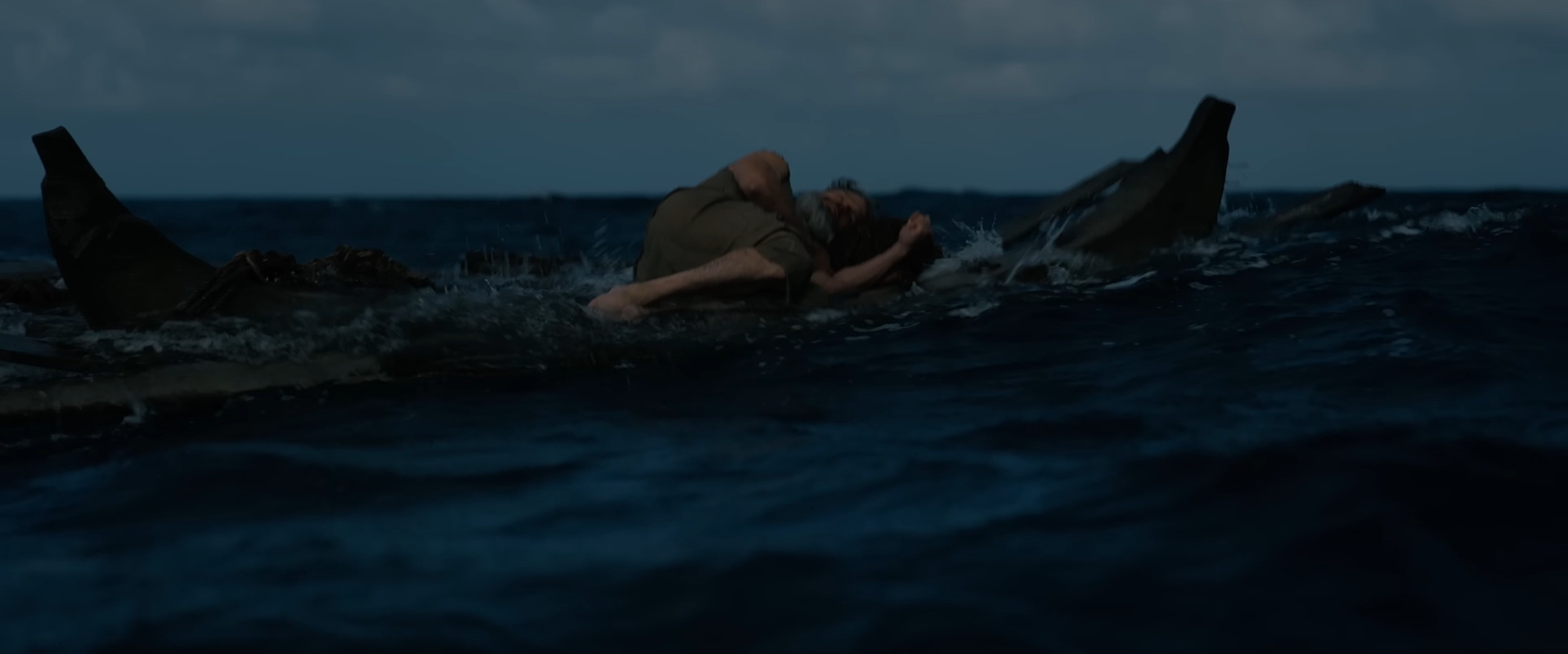
Now, the acclaimed filmmaker has set his sights on one of the oldest and most celebrated stories ever written. His upcoming adaptation of Homer’s The Odyssey promises to combine mythology, history, and large-scale practical filmmaking in a way audiences have rarely experienced before. Since Universal Pictures officially announced the project, searches for Christopher Nolan The Odyssey production details have surged as movie enthusiasts attempt to uncover every piece of information available about the film.
From filming across multiple continents to pioneering new IMAX technology, nearly every aspect of the production reflects Nolan’s obsession with authenticity and scale.
In this first part of our comprehensive guide, we’ll explore how the film came together, why Nolan chose The Odyssey, the remarkable creative team behind the camera, and the extensive international production that is helping transform one of literature’s greatest epics into a modern cinematic masterpiece.
Why Christopher Nolan Chose The Odyssey
Christopher Nolan has spent much of his career exploring stories about extraordinary individuals facing impossible circumstances. His protagonists often wrestle with morality, sacrifice, time, memory, identity, and survival. At first glance, these themes may seem worlds apart from an ancient Greek poem written nearly three thousand years ago. However, a closer look reveals why The Odyssey feels like a natural fit for Nolan’s filmmaking philosophy.
Homer’s epic follows Odysseus, the King of Ithaca, as he struggles to return home after the Trojan War. His journey is far more than a physical voyage across dangerous seas. It is also an emotional and psychological test, forcing him to confront temptation, loss, fear, and responsibility while his family waits for his return.
Rather than simply adapting an ancient adventure story, Nolan appears to be focusing on the human themes that have allowed The Odyssey to endure for centuries. That decision is perhaps the most significant aspect of Christopher Nolan The Odyssey production details, because it suggests the film will prioritize character and emotion alongside spectacle.
Turning an Ancient Epic into a Modern Blockbuster
Adapting The Odyssey is no simple task. The original poem contains dozens of locations, mythical creatures, divine interventions, naval adventures, and emotional reunions spread across an enormous narrative.
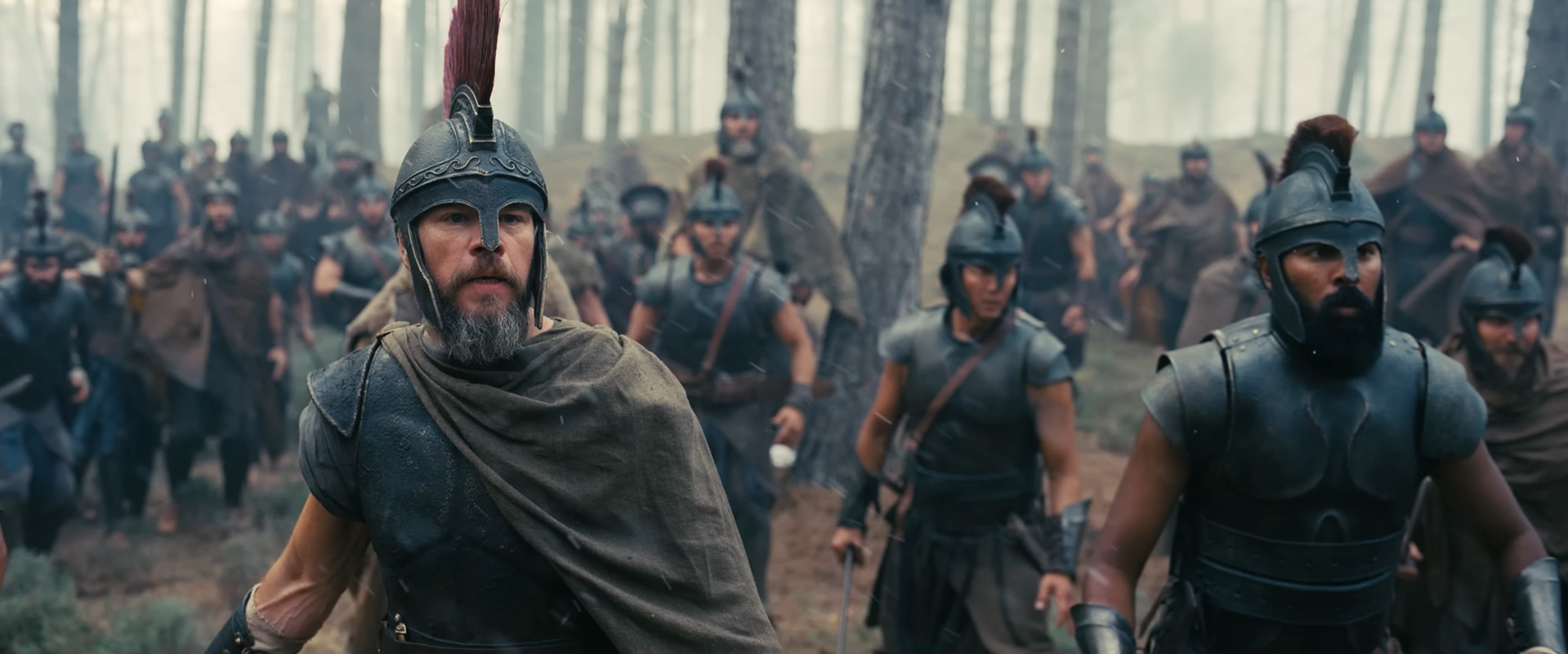
Rather than treating mythology as fantasy, Nolan is expected to ground the story in realism wherever possible. His films have always preferred believable environments over artificial ones, even when the stories themselves involve extraordinary concepts. This philosophy explains why discussions surrounding Christopher Nolan The Odyssey production details frequently emphasize practical filmmaking instead of visual effects.
For Nolan, authenticity has always enhanced immersion. Real environments create natural lighting, unpredictable weather, and physical textures that digital backgrounds struggle to replicate. That commitment becomes especially important when adapting a story that millions of readers already imagine vividly.
A Reunion with Universal Pictures
Another important chapter in Christopher Nolan The Odyssey production details begins with Universal Pictures.
Following the unprecedented success of Oppenheimer, Universal emerged as Nolan’s primary creative partner. The film not only became one of the highest-grossing biographical dramas ever made but also dominated awards season, ultimately winning multiple Academy Awards, including Best Picture and Best Director.
The successful collaboration strengthened the relationship between Nolan and Universal, giving the studio confidence to support another ambitious project.
As a result, The Odyssey is being designed from the ground up as a theatrical spectacle rather than a streaming-first production.
Christopher Nolan The Odyssey production details on the screenplay
Although Homer provided the source material, adapting an epic poem into a feature film requires extensive creative decisions. Christopher Nolan personally wrote the screenplay, allowing him to shape the narrative according to his own storytelling style.
With The Odyssey, Nolan faces a different challenge.
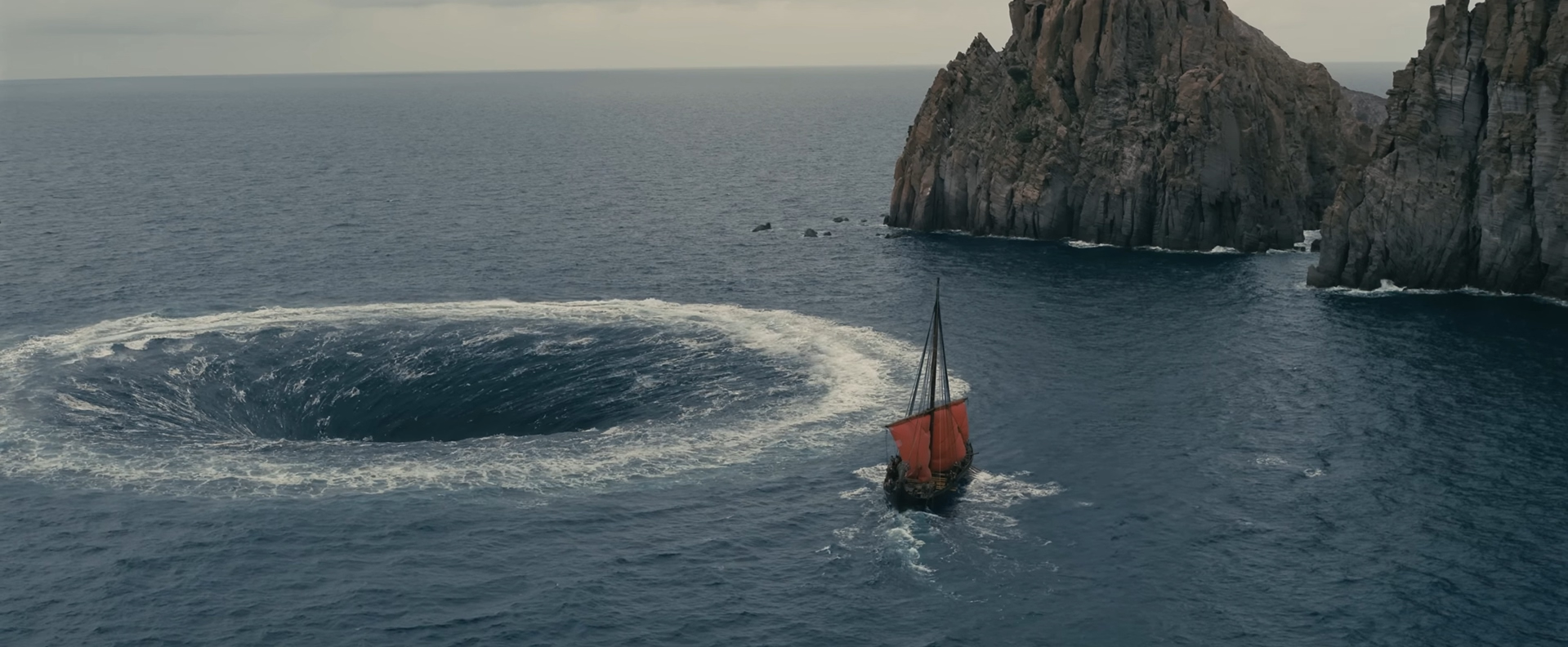
Unlike his original screenplays, this story already exists in one of history’s most influential literary works. His task is not to invent the journey but to reinterpret it for modern audiences while preserving its timeless themes.
This creative responsibility represents one of the most fascinating Christopher Nolan The Odyssey production details, because it will determine how closely the film follows Homer’s original narrative and where Nolan chooses to introduce his own perspective.
Emma Thomas Continues a Remarkable Partnership
Behind every Christopher Nolan production stands producer Emma Thomas, whose collaboration with the director stretches back more than two decades.
Considering the enormous scale of The Odyssey, her experience is invaluable.
Filming across several countries while coordinating one of Hollywood’s largest ensemble casts requires extraordinary planning. Every location introduces new regulations, transportation requirements, weather concerns, and scheduling conflicts. Maintaining creative consistency across such an expansive production is a challenge few filmmakers attempt.
Emma Thomas has repeatedly demonstrated that she excels in exactly these circumstances, making her role central to the success of Christopher Nolan The Odyssey production details.
The Cast Reflects Nolan’s Love for Ensemble Storytelling
Christopher Nolan rarely builds his films around a single performer. Instead, he assembles ensembles where every character contributes meaningfully to the larger narrative.
The Odyssey continues that tradition with one of the strongest casts in recent memory.
Matt Damon leads the film as Odysseus, marking another collaboration between the actor and Nolan after Oppenheimer. Damon possesses the dramatic range necessary to portray a character who must balance intelligence, courage, vulnerability, and exhaustion across a decade-long journey home.
Opposite him, Tom Holland takes on the role of Telemachus. Although many audiences know Holland primarily through blockbuster franchises, his dramatic performances have demonstrated an ability to portray emotionally conflicted young characters. Telemachus represents exactly that type of role—a son growing into adulthood while searching for the father he barely remembers.
Anne Hathaway returns to work with Nolan once again, portraying Penelope. Her previous collaborations in The Dark Knight Rises and Interstellar established a creative partnership built on emotionally complex performances. Penelope’s unwavering loyalty and quiet strength provide the emotional foundation of Homer’s epic, making Hathaway a compelling choice for the role.
Supporting performances from Lupita Nyong’o, Charlize Theron, Zendaya, Jon Bernthal, Mia Goth, Benny Safdie, Samantha Morton, Elliot Page, Himesh Patel, and several other accomplished performers complete one of the deepest casts assembled for a modern historical epic.
Also Read: Squid Game Season 4: Release Date Rumors, Cast, Story & Latest Updates (2026)
The sheer talent involved remains one of the most talked-about Christopher Nolan The Odyssey production details, suggesting the film will emphasize performance just as much as spectacle.
Filming the Ancient World Without Relying on Sound Stages
One aspect of Christopher Nolan The Odyssey production details immediately separates the film from many recent blockbusters: its commitment to filming on location.
Instead of relying primarily on green screens, the production traveled across multiple countries to capture real landscapes capable of representing the world of ancient Greece.
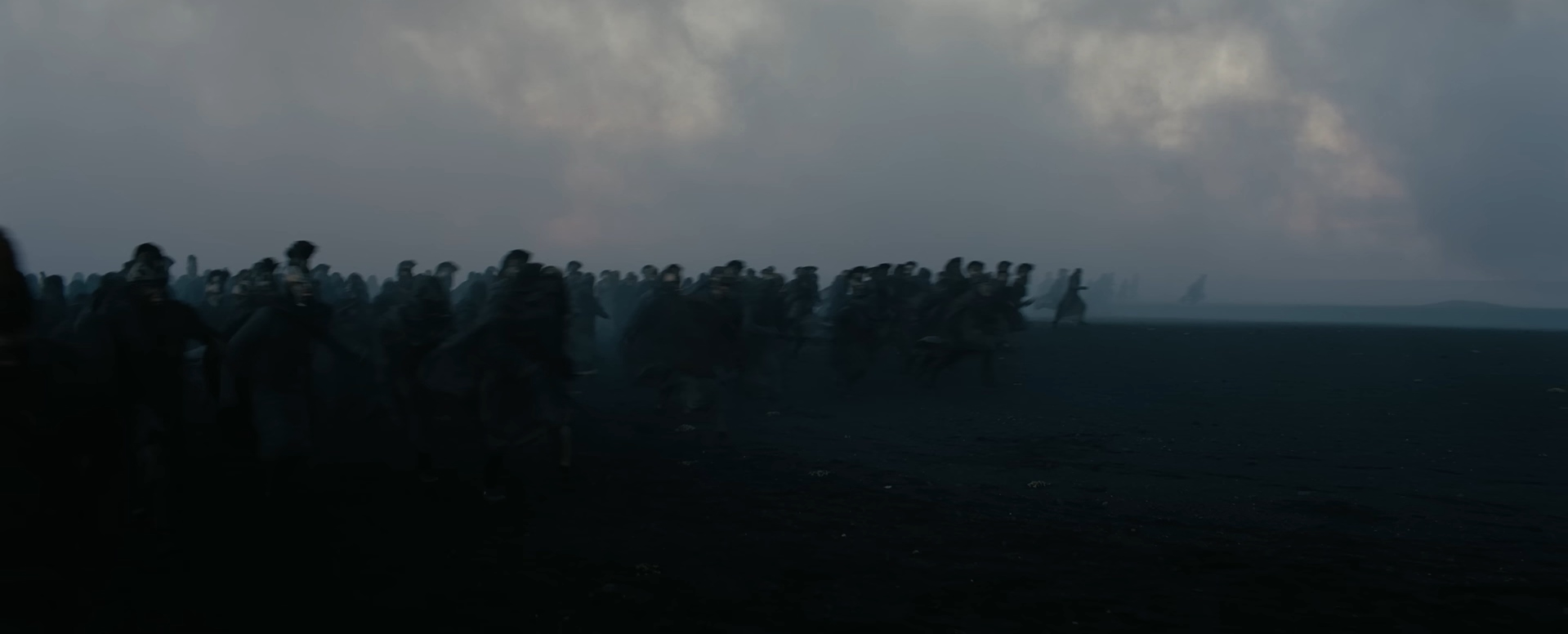
Each location was chosen not simply because it looked beautiful but because it possessed the natural textures, geography, and atmosphere necessary to immerse audiences within Odysseus’ legendary journey.
That philosophy shapes every stage of production and continues to distinguish Christopher Nolan The Odyssey production details from many contemporary epics.
Greece: Bringing Homer’s World Back to Life
When discussing Christopher Nolan The Odyssey production details, no filming location is more important than Greece itself. It would have been almost impossible to adapt Homer’s legendary poem without returning to the landscapes that inspired the original story. While modern filmmaking often recreates historical settings inside massive studios, Nolan once again chose the harder route—taking his cast and crew directly to real locations.
Reports indicate that the production spent considerable time filming along coastal regions where the Mediterranean Sea itself became an important visual character. Rather than creating oceans digitally, Nolan wanted audiences to experience the unpredictable movement of real waves, changing weather, and natural sunlight. These elements have always been central to his filmmaking philosophy because they create subtle visual details that are difficult to reproduce with computer-generated imagery.
Working in Greece also presented significant logistical challenges. Transporting IMAX equipment, coordinating hundreds of crew members, and protecting historical sites required careful planning. Local authorities worked closely with the production team to ensure filming respected archaeological and environmental regulations while still allowing Nolan to achieve his creative vision.
This commitment to authenticity explains why Christopher Nolan The Odyssey production details have generated so much excitement among both film enthusiasts and historians. Rather than using Greece merely as a visual reference, the production embraced the country as an essential part of the storytelling process.
Italy’s Historic Landscapes Offer Cinematic Scale
After completing portions of production in Greece, the crew moved to Italy, another country whose dramatic landscapes perfectly complement Homer’s epic.
Italy provides an extraordinary variety of locations within a relatively small geographical area. Ancient ruins, medieval architecture, rocky coastlines, mountain villages, and historic harbors all contribute to an atmosphere that feels remarkably close to the ancient Mediterranean world.
Christopher Nolan has often preferred locations that already possess strong visual identities. Instead of constructing elaborate sets from scratch, he allows natural environments to enhance the storytelling. Italy offered precisely that opportunity.
Among the many Christopher Nolan The Odyssey production details, the decision to film extensively across Italy reinforces Nolan’s dedication to practical filmmaking instead of relying on virtual production techniques.
Morocco Continues Nolan’s Tradition of Real-World Filmmaking
Morocco has become one of Hollywood’s most popular destinations for epic filmmaking, and for good reason. Its vast deserts, rocky mountain ranges, and historic settlements have appeared in productions ranging from Gladiator to Lawrence of Arabia.
For The Odyssey, Morocco offers something equally valuable: scale.
The endless landscapes immediately communicate isolation, danger, and survival. They allow Nolan to capture wide panoramic shots without modern buildings interrupting the illusion of the ancient world. Rather than digitally removing signs of civilization, the production simply traveled to places where untouched natural scenery already existed.
Whether filming fighter planes for Dunkirk or constructing rotating corridors for Inception, Nolan has consistently demonstrated that practical solutions often produce the most memorable cinematic moments. That same philosophy continues throughout Christopher Nolan The Odyssey production details, making Morocco an essential part of the film’s visual identity.
Iceland Provides an Otherworldly Atmosphere
Christopher Nolan’s admiration for Iceland is well documented. He previously transformed the country’s volcanic landscapes into alien planets for Interstellar, and now he returns once again to harness its extraordinary natural beauty.
Few places on Earth look as dramatic as Iceland. Black sand beaches stretch toward towering cliffs. Waterfalls cascade through volcanic valleys. Massive glaciers stand alongside fields of hardened lava. These landscapes possess an almost mythical quality, making them ideal for scenes involving gods, monsters, and legendary encounters.
This preference for authentic locations continues to define Christopher Nolan The Odyssey production details, distinguishing the film from many modern fantasy productions that rely almost exclusively on digital environments.
You may also like: Top 5 Bollywood Controversies That Shocked India: Dark Truths, Scandals & Turning Points
Scotland Adds Drama to the Journey
The production also traveled to Scotland, where dramatic cliffs, rugged coastlines, and ancient castles provide yet another distinctive visual style.
Scotland’s unpredictable weather may seem like a challenge for filmmakers, but for Nolan it often becomes an advantage. Heavy clouds, mist, rain, and changing sunlight add atmosphere that cannot easily be planned or recreated digitally.
As a result, Scotland contributes another unique chapter to Christopher Nolan The Odyssey production details, expanding the visual diversity of Odysseus’ journey while remaining consistent with Nolan’s practical filmmaking philosophy.
A New Generation of IMAX Cameras
Perhaps the most technically fascinating aspect of Christopher Nolan The Odyssey production details is the production’s use of next-generation IMAX film cameras.
Christopher Nolan has been one of IMAX’s strongest advocates for nearly two decades. Films such as The Dark Knight, Interstellar, Dunkirk, Tenet, and Oppenheimer all demonstrated his commitment to capturing images on large-format film whenever possible.
For The Odyssey, that partnership reportedly reached another milestone.
The newer generation of cameras reportedly addresses many of those challenges while preserving the extraordinary image resolution that has become synonymous with Nolan’s work.
This technical advancement means audiences can expect more scenes than ever before to be presented in the expanded IMAX format, allowing landscapes, battles, and intimate character moments to appear with remarkable clarity.
Why Christopher Nolan Still Prefers Film
In an era when most major productions rely almost entirely on digital cameras, Christopher Nolan continues to champion traditional film photography.
His preference is not rooted in nostalgia alone.
Film captures subtle variations in light, color, and texture that many cinematographers believe remain difficult to reproduce digitally. Combined with IMAX’s massive frame size, the result is an image with extraordinary detail and depth.
For The Odyssey, these qualities are particularly important. Ancient landscapes, ocean horizons, weathered ships, and historical costumes all benefit from the richness that film photography provides.
These artistic decisions represent some of the most distinctive Christopher Nolan The Odyssey production details, reinforcing Nolan’s reputation as one of cinema’s strongest defenders of large-format film.
Hoyte van Hoytema Returns Behind the Camera
A Christopher Nolan film would not feel complete without cinematographer Hoyte van Hoytema.
Their creative partnership has produced some of the most visually celebrated films of the last decade. Together they have explored space, dreams, war, time inversion, and nuclear history. Now they face the challenge of bringing one of literature’s greatest adventures to life.
This attention to detail continues to shape Christopher Nolan The Odyssey production details, ensuring that every frame contributes to the film’s immersive atmosphere.
Isn’t it true that: Has Tom Holland Lost His Box Office Magic in 2026? Recent Movie Analysis
Building a Living Ancient World
One of the most impressive aspects of the production is its dedication to creating believable historical environments.
These efforts may seem invisible to casual viewers, but together they contribute enormously to the authenticity that defines Christopher Nolan The Odyssey production details.
When audiences believe the world surrounding the characters is real, every emotional moment becomes more powerful.
Frequently Asked Questions (FAQs)
1. What are the latest Christopher Nolan The Odyssey production details?
The latest Christopher Nolan The Odyssey production details reveal that the film is being produced by Syncopy and Universal Pictures, filmed across Greece, Italy, Morocco, Iceland, and Scotland using advanced IMAX film cameras. Christopher Nolan is directing and writing the screenplay, while Emma Thomas serves as producer.
2. Who is in the cast according to Christopher Nolan The Odyssey production details?
According to the confirmed Christopher Nolan The Odyssey production details, the cast includes Matt Damon as Odysseus, Tom Holland, Anne Hathaway, Zendaya, Robert Pattinson, Lupita Nyong’o, Charlize Theron, Jon Bernthal, Benny Safdie, and several other acclaimed actors.
3. Where was the movie filmed based on Christopher Nolan The Odyssey production details?
The official Christopher Nolan The Odyssey production details confirm filming in Greece, Italy, Morocco, Iceland, and Scotland. These real-world locations were selected to authentically recreate the ancient Mediterranean setting described in Homer’s epic poem.
4. Why are Christopher Nolan The Odyssey production details generating so much excitement?
Many fans are excited about Christopher Nolan The Odyssey production details because the film combines practical effects, large-format IMAX cinematography, an award-winning creative team, and one of the strongest ensemble casts in recent Hollywood history.
5. What cameras are being used in Christopher Nolan The Odyssey production details?
One of the most interesting Christopher Nolan The Odyssey production details is Christopher Nolan’s use of next-generation IMAX film cameras. These cameras provide exceptional image quality while allowing more flexibility for dialogue scenes and large-scale action sequences.
6. How does Christopher Nolan The Odyssey production details differ from previous Greek mythology movies?
Unlike many mythology adaptations that depend heavily on CGI, Christopher Nolan The Odyssey production details emphasize practical filmmaking, real locations, handcrafted sets, and large-format film photography to create a more immersive cinematic experience.
7. When will the movie release according to Christopher Nolan The Odyssey production details?
Current Christopher Nolan The Odyssey production details indicate that the film is scheduled for a worldwide theatrical release on July 17, 2026, with a strong emphasis on IMAX screenings.
8. Is Christopher Nolan The Odyssey based directly on Homer’s epic?
Yes. The confirmed Christopher Nolan The Odyssey production details state that the film adapts Homer’s classic epic poem, following Odysseus’ long journey home after the Trojan War while presenting the story through Christopher Nolan’s distinctive filmmaking style.
9. Who is producing the film in Christopher Nolan The Odyssey production details?
The official Christopher Nolan The Odyssey production details identify Emma Thomas as the producer through Syncopy, continuing her long-running collaboration with Christopher Nolan on films such as Interstellar, Dunkirk, Tenet, Oppenheimer, and now The Odyssey.
10. Why should movie fans follow Christopher Nolan The Odyssey production details?
Following Christopher Nolan The Odyssey production details provides insight into the film’s casting, filming locations, IMAX technology, practical effects, production progress, and release updates, helping fans stay informed about one of the most anticipated films of the decade.