When I first watched In Time (2011), I was absolutely blown away by its concept. It’s one of those rare sci-fi movies that doesn’t rely only on futuristic technology or visual spectacle, but instead gives us a thought-provoking idea: what if time itself was the currency of life? As someone who loves unique movie concepts, this film really stayed with me, and even years later, I find myself revisiting its themes.
In this blog post, I’ll share my detailed review of In Time, what I loved about it, its strengths, its flaws, and why it still feels incredibly relevant in today’s world.
The Unique Concept of In Time (2011)
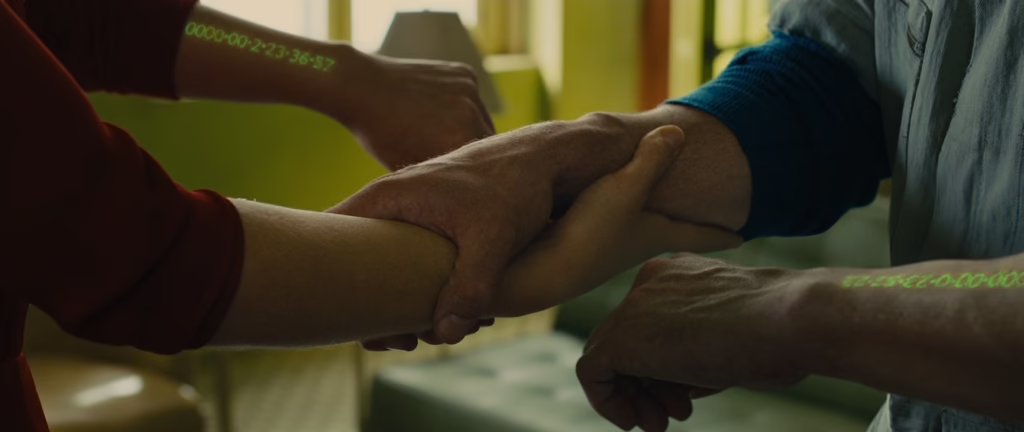
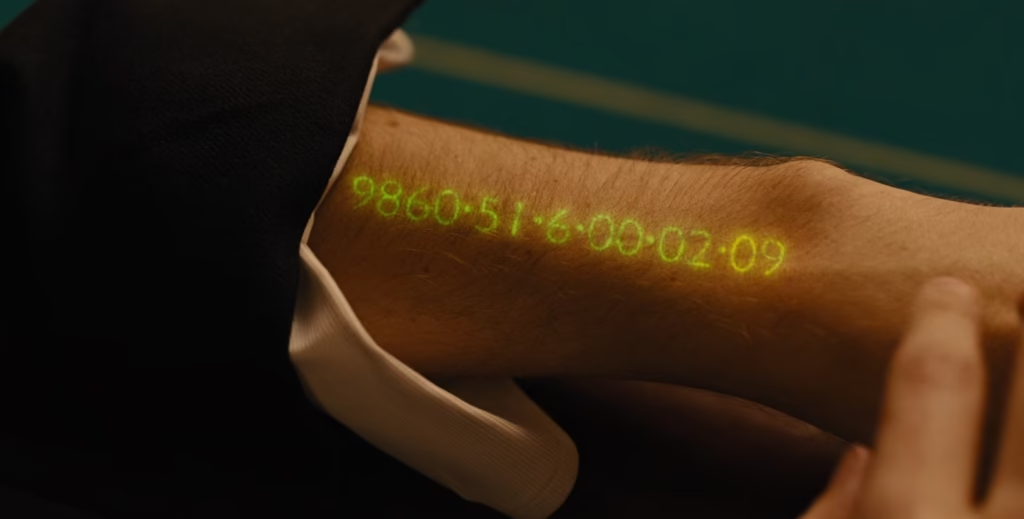
The movie is set in a dystopian future where time has replaced money. People stop aging at 25, and from that moment, every person has a glowing countdown clock on their arm. If the clock runs out, you die instantly. Time is earned, borrowed, stolen, and traded—just like money in our real world.
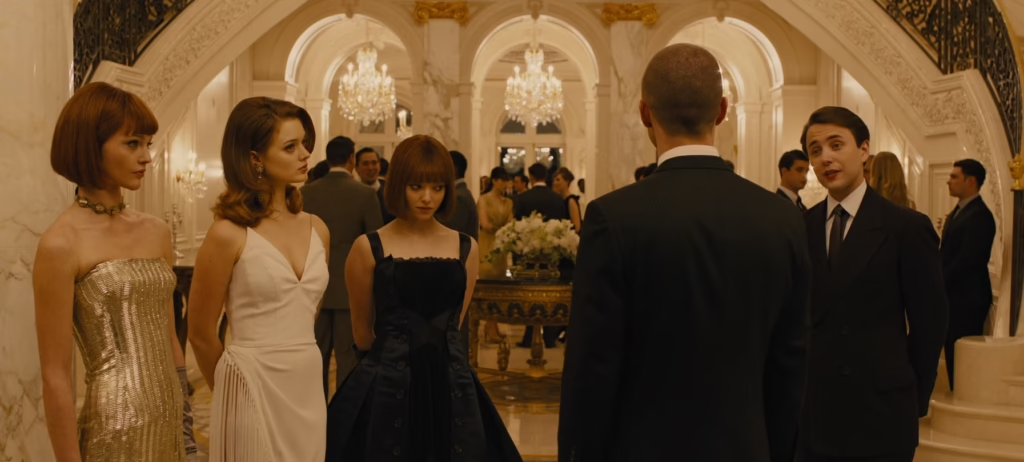
When I first saw this, I couldn’t stop thinking: what an incredible metaphor for our society! In our world, we already say things like “time is money,” but In Time takes that phrase literally. The poor live day-to-day with barely 24 hours on their clocks, while the rich have centuries, even millennia, to live in luxury.
This idea immediately hooked me. It was chilling, yet fascinating.

Cast and Performances
The movie stars Justin Timberlake as Will Salas, a working-class man who inherits a century of time from a wealthy stranger. I’ll admit, I wasn’t expecting Timberlake to pull off such a role, but he really surprised me. He carried the desperation, anger, and determination of his character convincingly.
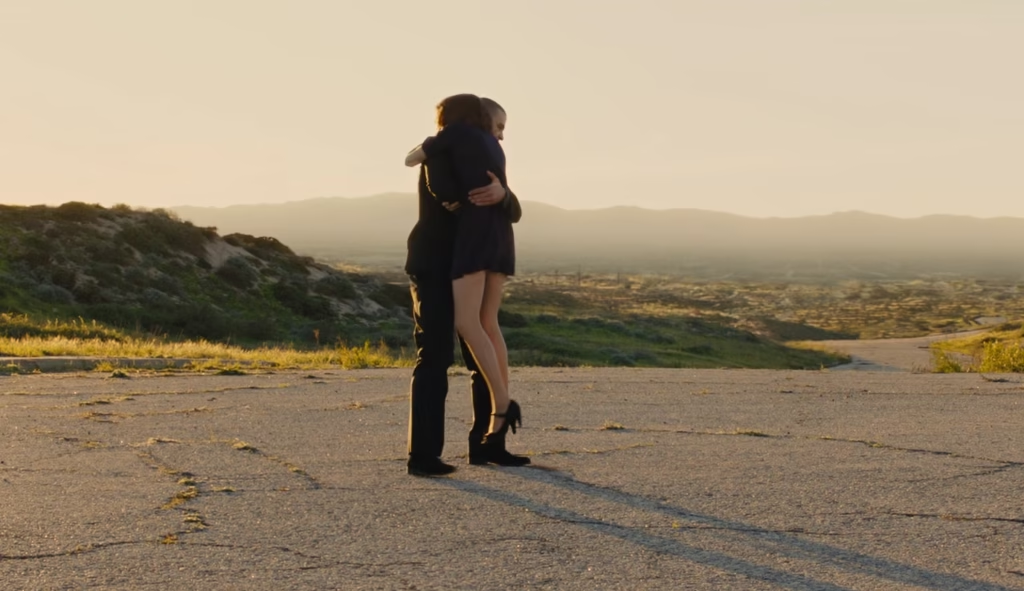
Amanda Seyfried plays Sylvia Weis, the daughter of a wealthy time magnate. Together, she and Will form an unexpected partnership, turning into a sort of Bonnie-and-Clyde duo who challenge the corrupt system. Seyfried’s striking looks and intensity added a lot to the film, and her chemistry with Timberlake kept me invested.
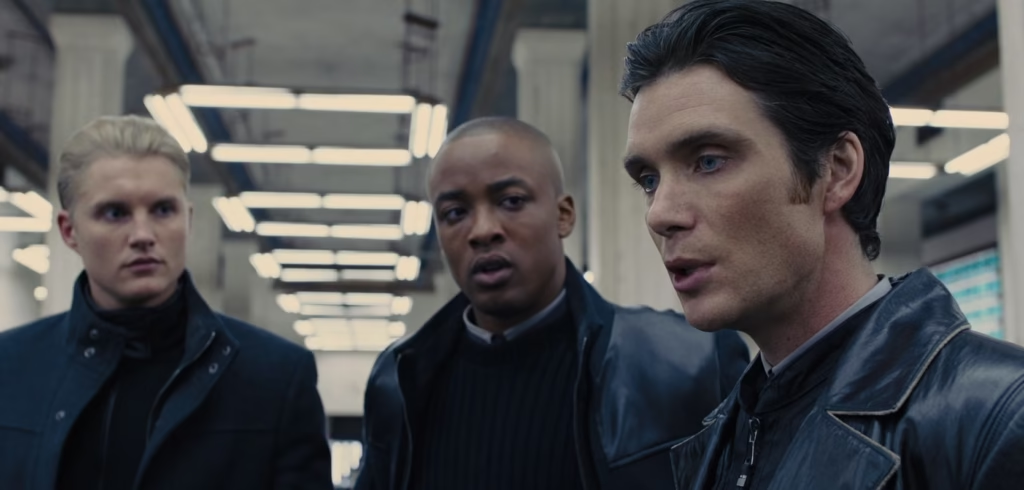
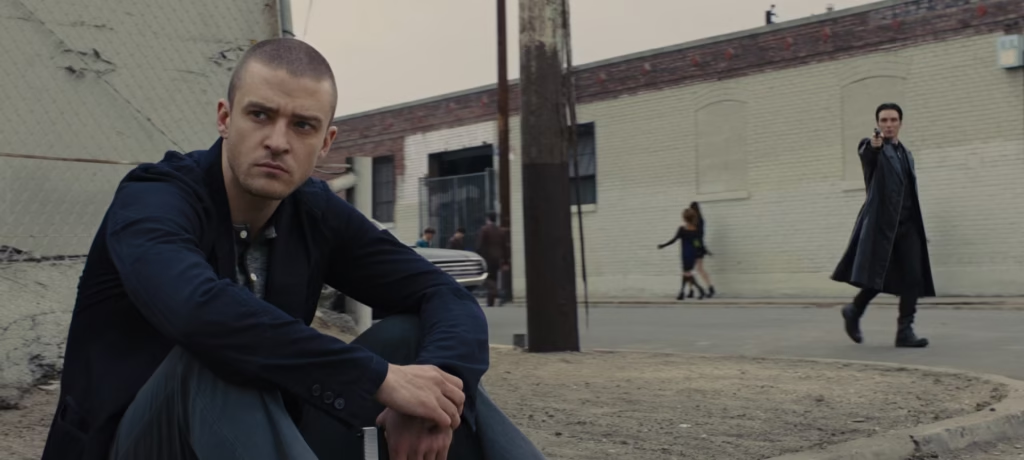
Cillian Murphy, as the relentless “timekeeper” Raymond, was another highlight. His presence added weight to the chase sequences, and he brought depth to what could have easily been a one-dimensional role.
Why I Loved In Time (2011)
For me, the biggest reason I loved In Time (2011) was its world-building and concept. The film didn’t just tell a story; it made me reflect on real life. The way the poor in the film lived paycheck-to-paycheck (or in this case, hour-to-hour) reminded me of how so many people in our society struggle to survive financially.
The movie cleverly mirrors class inequality, exploitation, and how systems are designed to keep the rich in power. The line where someone says, “For a few to be immortal, many must die,” really struck me. That one sentence explained the entire socio-economic imbalance, both in the film and in reality.
I also loved the thrilling pace. Every moment in the movie is literally a matter of life and death. When you see characters running with only a few minutes left on their clocks, your heart races with them.
Cinematography and Visuals
The futuristic yet grounded look of In Time (2011) appealed to me. Instead of going full sci-fi with neon cities and flying cars, the film used sleek, modern architecture and clean designs. This choice made the world feel more believable and closer to our own.
The glowing countdown clocks on people’s arms were simple yet brilliant visual storytelling tools. Every time the camera focused on them, I felt the tension rise.
The Flaws
While I absolutely loved the concept of In Time, I’ll admit the execution wasn’t perfect. Some parts of the story felt predictable, and a few characters could have been developed more deeply. The movie leans heavily on action-thriller elements, and at times, I wished it had slowed down to explore the philosophical aspects even further.
But honestly, even with these flaws, I still enjoyed the film a lot. The idea itself was so strong that it overshadowed the shortcomings for me.
Also Read: Avatar 3 Hype Is Massively Overrated – The Shocking Truth Behind Fan Disappointment
Lessons and Relevance Today
What makes In Time timeless (pun intended) is how relevant its themes are today. The rich getting richer while the poor struggle for survival isn’t just sci-fi—it’s reality. The movie might exaggerate it by turning time into currency, but the underlying truth hits hard.
Watching it made me think about how much of our lives we trade away just to survive. We literally “spend” our time working, often sacrificing health, relationships, and dreams. In Time (2011) forces us to ask: what would we do if time really was money?
My Favorite Scenes
One of my favorite moments was when Will gives away time to those in need. The symbolism of sharing life itself was powerful. Another intense scene was the running sequence where every second counted, and Will barely made it before his clock hit zero. Those adrenaline-filled moments had me on the edge of my seat.
Also, the dynamic between Will and Sylvia evolving from distrust to partnership was something I enjoyed watching. Their rebellion against the unfair system gave the film its emotional core.
Why You Should Watch In Time (2011)
If you haven’t seen In Time yet, I highly recommend it. Don’t expect it to be a flawless masterpiece but go in for the thought-provoking concept and thrilling execution. It’s the kind of movie that makes you think long after it ends.
For sci-fi lovers like me, In Time (2011) is not just entertainment—it’s a reminder of how fragile and precious time really is.
Conclusion
To sum it up, In Time (2011) is one of the most unique sci-fi movies I’ve watched. I absolutely loved its concept of turning time into currency, and while it may not be perfect in execution, the movie left a strong impact on me. Its themes of inequality, survival, and the value of time still feel just as relevant today as they did when the film was released.
Want to go it to horror movies? Watch my top 5 classical horror recommendation here.
If you enjoy movies that mix action with deeper social commentary, In Time (2011) deserves a place on your watchlist. After all, our time is the most valuable thing we have—and this film makes sure we don’t forget it.
Pingback: 6 Shocking Truths About the Final Destination Movie Series and Why the Next Sequel Could Be the Best Yet - CineSyncs